In person first. Then in stages.
We come to your business, watch the work and talk to the people doing it before we propose anything.
Each stage has proposed outputs, subject to agreed scope.
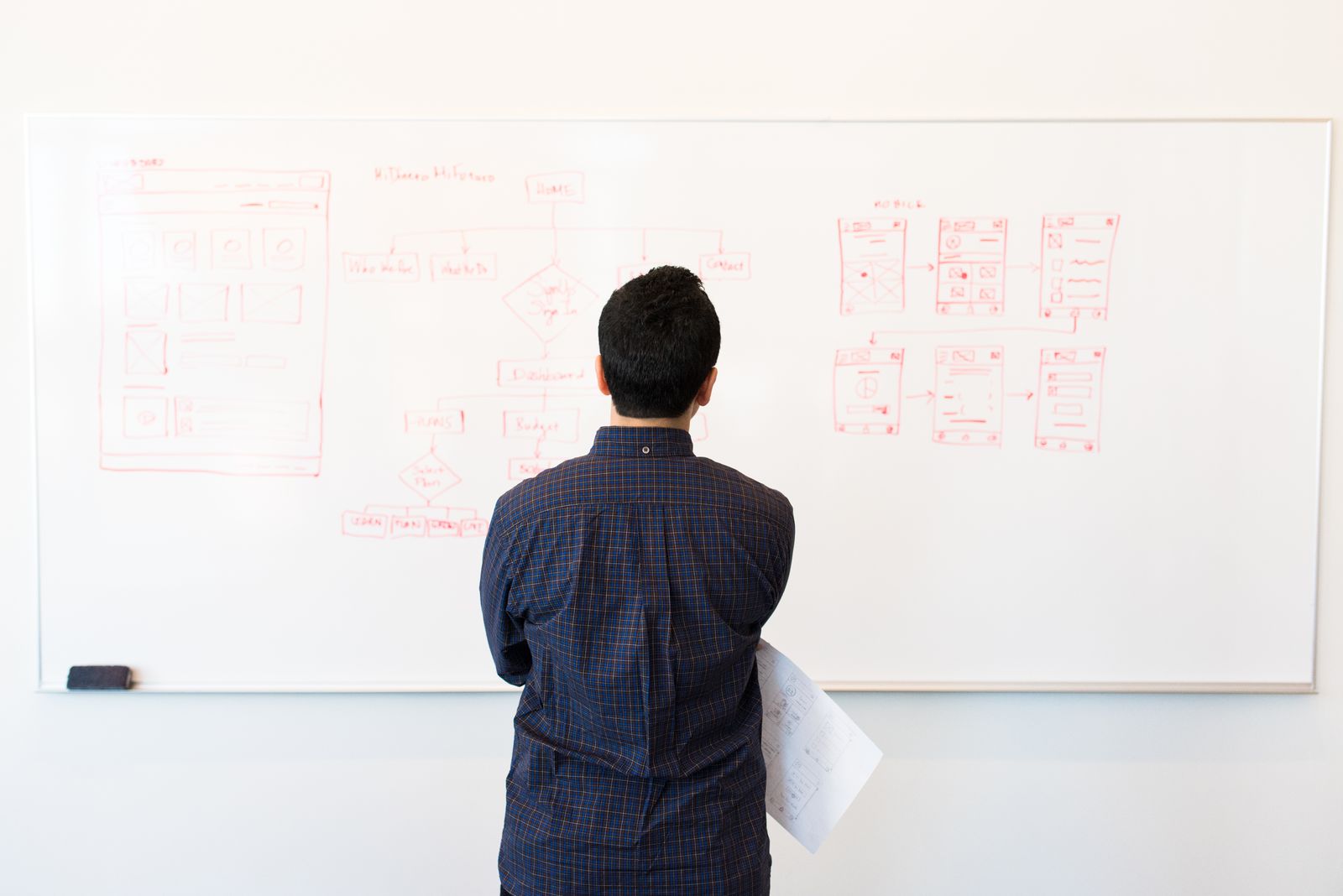
Audit
We come to you, watch the work and listen to the people doing it.
Every project starts on site. We spend time where the work actually happens (the office, the floor, the yard, the truck) and watch how a task moves from start to finish.
We talk with the people who do the work, not only the people who manage it. They know where the time goes, what the workarounds are, and why the official process and the real one differ.
What happens
- On-site observation of the workflows in question
- Interviews with team members across roles
- Mapping current workflows and hand-offs
- Reviewing current systems, data and documents
- Identifying constraints: connectivity, devices, budget, policy
Proposed outputs
- Workflow map
- Opportunity shortlist
- Risks and open questions
Subject to agreed scope.
Design
We co-design a scoped prototype with your team before committing to a build.
From the shortlist, we pick one opportunity worth proving and design it with the people who will use it. Sketches become a clickable or working prototype that the team can react to.
We write down what is in scope and, just as importantly, what is not. We agree where data comes from, which systems it touches, and exactly where a person reviews or approves.
What happens
- Co-design sessions with the people who will use it
- A scoped prototype tested against real scenarios
- Scope and explicit exclusions
- Data sources and integration approach
- Where human review and approval sit in the flow
Proposed outputs
- Prototype
- Architecture outline
- Acceptance criteria
Subject to agreed scope.
Build
We build in stages and test each one with your team on representative work.
We deliver in working increments rather than one large reveal. Each increment is something your team can use, test and push back on.
Testing happens with your people, on scenarios drawn from the real work, including the awkward cases. Rollout is planned with the team, with training that fits around shifts and seasons.
What happens
- Staged implementation in working increments
- Testing with your team, not only by us
- Representative scenarios, including edge cases
- Rollout planning and hands-on training
Proposed outputs
- Working increments
- Test findings
- Rollout plan and handover materials
Subject to agreed scope.
Monitor
We agree how we will know it is working, and who looks after it.
Launch is not the end. Before go-live, we agree the measures that matter for this project and how they will be reviewed.
Errors raise alerts, exceptions get reviewed, and maintenance responsibilities are written down: what we look after, what your team looks after, and how issues are escalated.
What happens
- Agreeing measures that reflect the original problem
- Error alerts and exception review
- Clear maintenance responsibilities on both sides
- Periodic review of whether it still fits the work
Proposed outputs
- Monitoring plan
- Ownership and escalation paths
- Review cadence, agreed per project
Subject to agreed scope.
Agreed in writing, before anything is built.
Before building, we agree access rights, processing location, retention, human approvals, logging, backups and support responsibilities.
The specific controls depend on the deployment you choose and what we agree together. We will explain the trade-offs plainly, including what a given setup does not cover.
- Access rights
- Who can see and change what, mapped to your roles.
- Processing location
- Where data is processed and stored, chosen with you.
- Retention
- How long records, images and logs are kept.
- Human approvals
- Which steps always need a person to sign off.
- Logging
- What is recorded, and who can review it.
- Backups
- What is backed up, how often, and how it is restored.
- Support responsibilities
- What we look after, what you look after, and how issues escalate.
Start with a conversation about the work.
A call or an in-person coffee is the easiest first step. We talk through the work, the people doing it and whether an audit is the right next step.